
Morning Hair Routine: Should You Wash, Refresh or Restyle?
Posted 1 month ago on - Hair Care, How-tos, Salon
Some mornings, your hair genuinely needs a fresh start.
Other mornings, the overall style is still working—but your roots are telling a different story. And sometimes your hair is basically fine except for a few pieces around your face that no longer sit the way you want them to.
Treating all three mornings the same can mean spending more time, using more product, or adding more heat than your hair actually needs.
A useful morning hair routine does not have to be a fixed list of steps. It can be much simpler:
Wash when your hair needs a reset. Refresh what has actually changed. Restyle only what needs attention.
The first step is figuring out which kind of morning you are having.
First: what kind of hair morning are you having?
Before reaching for shampoo, dry shampoo, a curling iron, or another styling product, look at what your hair is actually doing.
It may be a wash day if:
- Your scalp and roots feel ready to be cleansed.
- Oil or product buildup is noticeable beyond one small area.
- The lengths feel heavy or coated.
- Your texture is no longer responding well to refreshing.
- Getting the style back would take more effort than simply starting fresh.
It may be a refresh day if:
- Your roots look oily but the lengths still feel good.
- Your overall style is intact but has lost some freshness.
- Waves or curls have flattened in a few areas overnight.
- A little targeted attention could extend the style comfortably.
It may be a restyle morning if:
- Most of your hair still looks the way you want it to.
- The pieces around your face need some shape.
- One or two sections have bent or flattened overnight.
- The finish needs polish rather than a complete reset.
The goal is not to avoid washing or styling for as long as possible.
It is to stop treating every morning like the same problem.
Wash day: build the foundation while your hair is damp
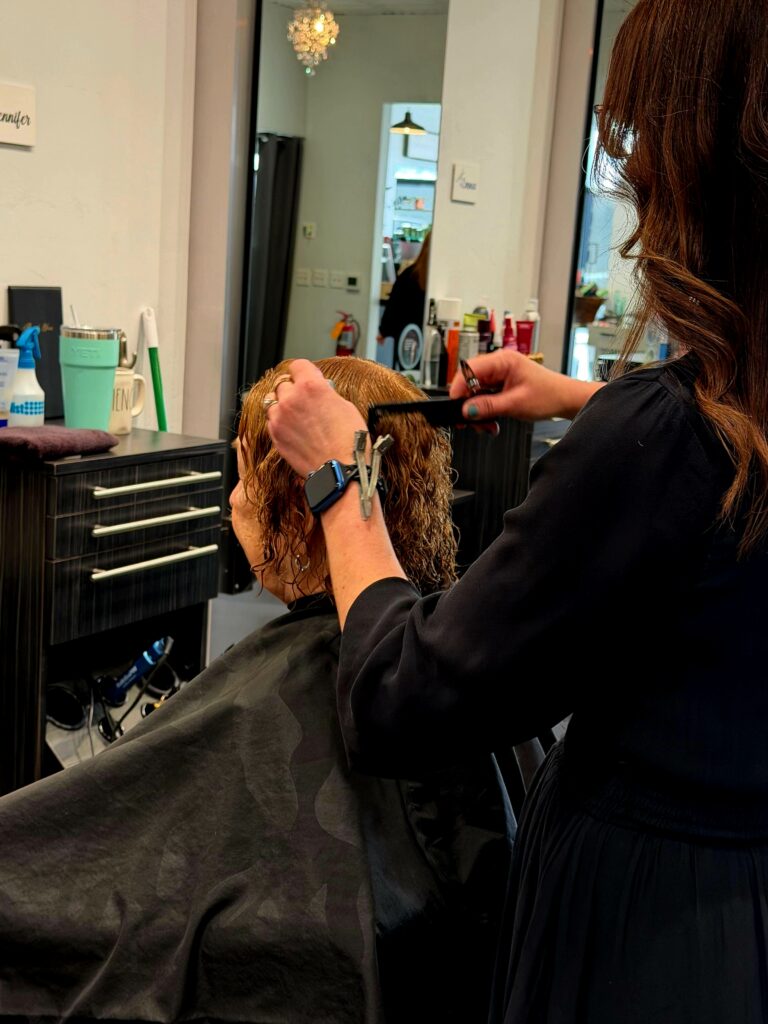
A good second-day routine often starts on wash day.
How you cleanse, condition, apply leave-in care, and set your style can influence how manageable your hair feels the next morning.
After washing, pay attention to where your hair actually needs support.
Fine hair may become weighed down when too much product is concentrated near the roots. Dense, curly, coily, or highly textured hair may benefit from working in sections so product reaches the areas that need it more evenly. Hair that is color-treated, dry, or frequently heat-styled may have different needs again.
This is one reason “use more product” is rarely the most useful instruction.
Placement and distribution matter too.
If you already use a leave-in product recommended by your stylist, work it through deliberately rather than automatically adding several different products that perform similar jobs.
One example is Aveda One For All Leave-In Elixir. Its official directions are intentionally simple: shake well, apply to damp hair, do not rinse, and style as desired.
At Savoye, we have already covered One For All in more detail, including how application can be personalized based on texture, density, condition, and styling goals.
[LINK: Read our guide to Aveda One For All Leave-In Elixir]
A stronger wash-day foundation can make the next morning less about fixing your hair and more about deciding whether anything actually needs attention.
Second-day hair: refresh the problem, not the whole head
“Second-day hair” can describe very different situations.
For one person, the issue is oil at the scalp.
For another, the roots look perfectly fine but yesterday’s waves have flattened.
Those are different problems and they do not necessarily need the same solution.
If your roots are oily
Start at the roots.
There is usually no reason to automatically coat the mid-lengths and ends with dry shampoo when the oil is concentrated at the scalp.
If you use a powder dry shampoo, apply it lightly where you actually need it, work it through the roots, and then reassess the style before adding more.
Aveda Shampowder Dry Shampoo, for example, is designed to absorb excess oil, sweat, and impurities while adding texture and volume. Aveda’s directions are to puff it lightly onto the roots, massage it into the scalp, and restyle as desired.
Dry shampoo can be useful for refreshing a style between washes.
But refreshing should still feel like a shortcut.
If you find yourself adding layer after layer of dry shampoo while your hair continues to feel heavy, coated, or uncomfortable, it may simply be time to wash.
If your waves or curls have lost their shape
This is a different kind of refresh.
Your roots may feel completely fine while one side has flattened overnight or individual curls and waves have stretched out.
Rather than soaking or restyling the entire head immediately, identify the areas that actually lost their shape.
Some hair responds well to a light mist of water and a small amount of the styling product already used on wash day. Other textures may need a more specific wave or curl refresher.
The right approach depends on your texture, density, styling products, and the result you want.
What matters most is the same principle:
Start with the area that changed rather than assuming the entire style needs to be rebuilt.
Running late? Restyle strategically
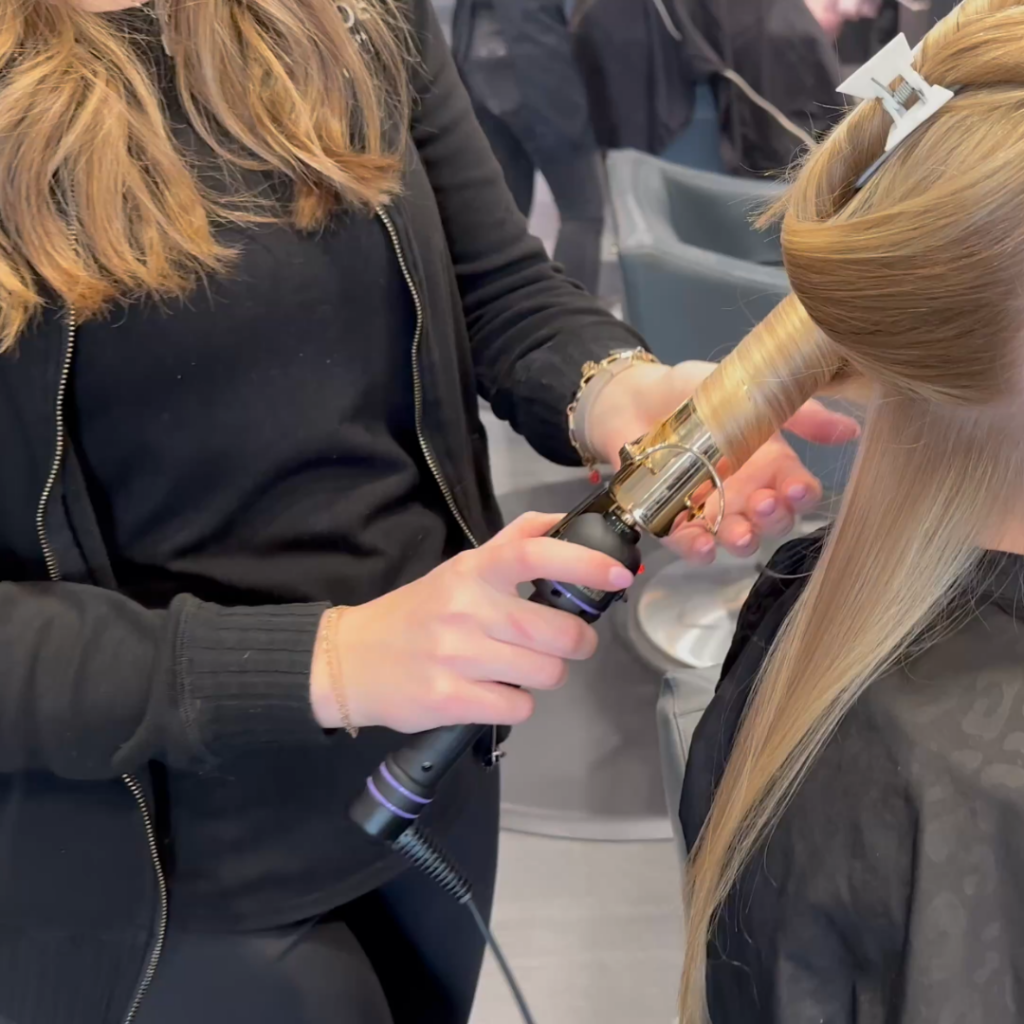
Some mornings do not call for washing or refreshing.
Your hair may already be 90% there.
The easiest approach can be to focus on the pieces people notice first—often the sections around your face.
Instead of reheating every strand:
- Start with dry hair.
- Apply a thermal protectant that is intended for dry-hair restyling.
- Choose two or three sections around the face that need more shape.
- Add a soft bend away from the face.
- Allow the sections to cool.
- Gently separate them and leave the remaining lengths as they are.
The cooling step matters because you are giving the shape a moment to set before pulling it apart.
If you use Aveda Heat Relief Thermal Protector & Conditioning Mist, its official directions are to shake well and spray lightly onto dry hair from 6–8 inches away, focusing on the mid-lengths and ends before heat styling.
Aveda’s own between-wash wave technique similarly combines targeted dry shampoo at the roots with thermal protection before heat styling.
The larger point is not that everyone needs to curl the front of their hair each morning.
It is that you do not have to restyle the entire head when only a few pieces need help.
Know when it is simply time to wash
There is a point where refreshing stops saving time.
If you have added dry shampoo, reactivated texture, restyled several sections, and your hair still does not feel the way you want it to, continuing to layer more onto the style may not make the morning easier.
It may simply be wash day.
Signs that starting fresh may make more sense include:
- Noticeable oil or buildup remains after refreshing.
- Your hair feels increasingly heavy with product.
- Your natural texture is becoming harder to revive.
- Your scalp feels ready to be cleansed.
- You are spending more time correcting the old style than creating a fresh one.
There is no universal rule that everyone should wash after the same number of days.
Texture, scalp, density, activity level, styling products, weather, services, and personal preference can all affect what makes sense for you.
The objective is not to win a contest for the longest time between washes.
It is to have a routine that works.
Your easiest morning routine starts before morning
If styling your hair every morning consistently feels harder than it should, the issue may not be the morning itself.
Several things can influence how easily your hair falls back into place:
- Your haircut shape
- How the hair was styled on wash day
- Your texture and density
- Color or chemical-service history
- Product amount and placement
- How your hair behaves overnight
- Humidity and weather
- How much maintenance you realistically want to do
A haircut can make an especially noticeable difference.
Layers, weight, face-framing, length, and the way the shape works with your natural movement can all affect how much effort is required at home.
That is one reason Savoye’s haircut consultations include questions about how you actually style your hair—not only what you want it to look like when you leave the salon.
What to Expect at Your First Haircut Appointment at Savoye
A beautiful result in the salon is valuable.
A haircut that still makes sense on a regular Tuesday morning is even better.
Your morning hair routine should change with your hair
There is no universal “perfect” morning hair routine.
A routine for fine, straight hair may look completely different from one for dense curls. Someone with dimensional color may need different support from someone with untreated hair. A guest who loves heat styling may have a completely different morning than someone who wants to air-dry and go.
Even your own routine may change throughout the year.
Humidity, dryness, a new haircut, color services, changes in length, or simply deciding that you want to spend less time styling can all change what feels easy.
If your current routine works, there is no need to complicate it.
If it does not, the answer may be to simplify rather than add more.
Morning hair routine FAQs
Should I wash my hair every time my roots look oily?
Not necessarily.
If the oil is concentrated at the roots while the rest of your hair still feels comfortable and manageable, a targeted refresh may be enough.
If oil or buildup remains noticeable, the hair feels coated, or refreshing no longer gives you the result you want, it may make more sense to wash.
How can I refresh second-day hair without washing it?
First identify what has changed.
Oily roots may benefit from targeted dry shampoo. Flattened waves or curls may respond better to a light refresh focused only on the pieces that have lost shape.
Your entire head does not necessarily need the same treatment.
Can I use heat on second-day hair?
You can restyle dry hair with heat when appropriate, but use thermal protection designed for dry-hair restyling and avoid reheating every section simply because a few pieces need attention.
If only the face-framing pieces lost their shape, focus there.
When should I stop refreshing and wash my hair?
When refreshing is no longer making your routine easier.
If your hair or scalp feels ready to be cleansed, product has accumulated, or rebuilding the style is taking more effort than washing and starting fresh, that is a reasonable sign that the refresh has done its job.
A simpler routine should still feel like your hair
Good morning hair is not about doing the most.
It is about understanding what your hair actually needs that day.
Wash when you need a reset. Refresh what actually changed. Restyle only what needs attention.
And if getting your hair to cooperate every morning consistently feels harder than it should, the answer may not be another tutorial or another product.
Your haircut, styling routine, or product combination may simply need to work better together.
Ask your Savoye stylist what they would simplify first.
Ready for your next visit?